Broadcasting Into the Void: Meet the Man Who Never Stopped Rolling Tape
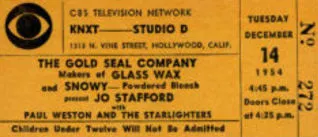
Photo: CBS Television, Public domain, via Wikimedia Commons
The studio lights hum the way old fluorescent tubes do — a low, patient drone that never quite becomes silence. There's a camera on a tripod older than most TikTok users. There's a man behind a desk covered in papers, coffee mugs, and what appears to be three decades of unopened mail. And there's a red light above the door that says ON AIR, glowing at 9 PM on a Tuesday, exactly like it has every Tuesday since the Clinton administration.
Nobody is watching. Probably.
And that's the thing about public access television in 2024: the not-knowing is part of the deal.
The Medium That Wasn't Supposed to Be a Business
Public access TV was born out of a regulatory compromise in the 1970s. Cable companies, in exchange for digging up everyone's sidewalks, agreed to fund local studios where any resident could produce and air their own show. Free speech, literally broadcast. The result was beautiful chaos: puppet shows, conspiracy lectures, cooking segments shot in one take, call-in programs where the phone rang for hours with nobody on the line.
Most of it was unwatchable. All of it was real.
Then the internet ate the audience, cable companies stopped honoring the spirit of those agreements, and the studios started closing. Cities sold off the equipment. The volunteers went home. What's left is a scattered network of true believers — people like our host, who asked us not to use his real name but was happy to talk for three hours about why he's never missed an airdate.
"It's not about ratings," he told us, gesturing at a wall of binders containing every episode, hand-labeled. "Cable was never about ratings. It's about the fact that this channel exists and nobody can take it off me."
Creating for an Audience of Nobody
There's a philosophical question buried in that studio: if you broadcast a show and nobody watches, are you still a broadcaster?
The honest answer is that the people still doing this have stopped asking. They've moved past audience metrics into something closer to practice — a ritual. The show airs because the show airs. The camera gets set up because the camera gets set up. It's less like media production and more like tending a lighthouse for a coastline with no ships.
Psychologists might call it intrinsic motivation. The host calls it "keeping the channel warm." Either way, there's something almost defiant about it. In an era where every creative act is instantly measured, monetized, and optimized, here is a man producing weekly content with a viewer count of unknown and a revenue stream of nothing.
It might be the last genuinely pure form of broadcasting in America.
The Archivists Arrive
Here's where the story takes a turn nobody in that studio saw coming: the kids showed up.
A loose network of Gen Z media archivists — the same crowd digitizing VHS tapes and rescuing dead websites — has discovered public access archives, and they're treating them like lost treasure. And honestly, they're right to. These tapes are time capsules of ordinary American life that no network ever bothered to preserve. Local parades. Town council rants. A guy demonstrating how to sharpen knives for forty minutes. The stuff that never made it to history books because it was never meant for history.
Volunteers are driving to defunct studios with hard drives. They're negotiating with city clerks for access to shelved master tapes slowly decaying on magnetic media that has a shelf life measured in decades, not centuries. Some of the recovered footage ends up on YouTube, where clips of unhinged local commercials and passionate community-access monologues routinely pull millions of views — more than the original broadcasts ever dreamed of.
The irony is thick. The shows nobody watched live are becoming the most-watched content from their era, decades late, delivered by an entirely different distribution system.
Why It Matters
You could dismiss all of this as nostalgia, and some of it is. But there's a deeper point: public access was the last mass experiment in truly local, truly unmediated broadcasting. No algorithm. No advertiser. No gatekeeper. Just a channel and a citizen.
When the last of these hosts finally powers down the camera, something goes with them — not just an archive, but proof that the airwaves once belonged, at least partly, to everyone.
So the red light stays on. The tape rolls. Somewhere, a signal travels down a wire to a living room that may or may not contain a television that's even plugged in.
He doesn't check. He never checks. That was never the point.