The Modders at the Edge: How Hackers Are Turning Commercial Games Into Underground Art
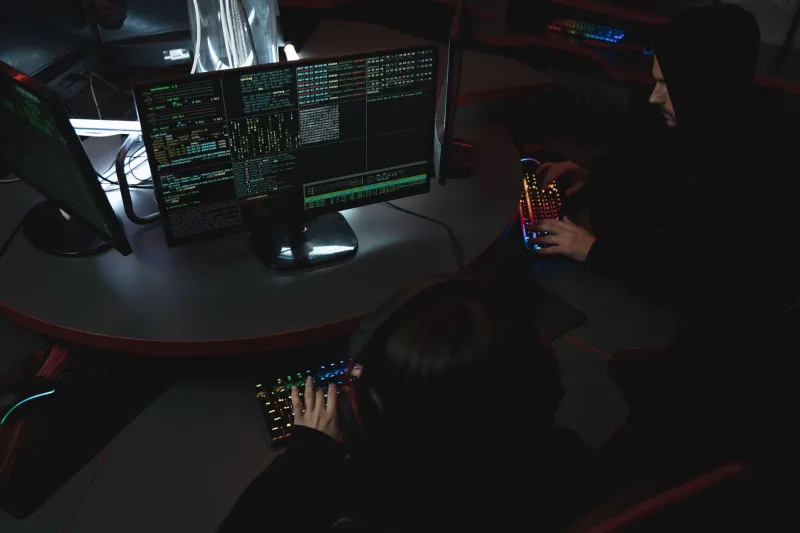
In 1993, a group of hobbyist programmers figured out how to crack open the code of Doom and start building their own levels. id Software, the game's developer, didn't just tolerate this — they actively encouraged it, releasing modding tools and watching as their game became a platform for thousands of amateur creators. It was one of the more generous decisions in commercial entertainment history, and it accidentally launched a tradition that's still producing strange and remarkable work thirty-plus years later.
The modding scene has evolved considerably since then. What started as level editors and texture swaps has grown into something that encompasses full game overhauls, unauthorized sequels, political art projects, and a whole discipline of what might genuinely be called digital archaeology. The people doing this work don't think of themselves as pirates or vandals. Most of them think of themselves as the most dedicated fans in the room — and also, increasingly, as artists.
What Dataminers Actually Do
Before we get into the weirder corners of this world, it's worth clarifying what datamining actually is, because it gets mischaracterized constantly.
When a game ships, the files on the disc or the download package contain a lot more than what you actually see during normal play. Cut content, unused dialogue, scrapped mechanics, alternate story paths, early versions of characters — all of it often sits in the game's data, dormant. Dataminers are the people who dig into those files and pull that content out.
Sometimes what they find is mundane. Sometimes it's extraordinary. The Fallout: New Vegas datamining community has spent years reconstructing content from a game that shipped notoriously unfinished, piecing together cut quests and characters into mods that restore what the developers originally intended. It's less like hacking and more like finding the director's cut of a film that was released in a compromised version.
"We're not changing the game," explains a dataminer who goes by the handle Rustbucket_Actual and has been active in the Fallout modding community for eight years. "We're finishing it. The developers built this stuff. They had a vision. We're just honoring that vision because the publisher didn't give them enough time to."
This framing — modder as preservationist, as advocate for the original creative intent — is genuinely persuasive in a lot of cases. It's harder to apply when the modders are doing something the developers definitely didn't intend and probably wouldn't endorse.
ROM Hacks as Alternate History
ROM hacking — modifying the code of older games stored in ROM format — has been around almost as long as emulation, and the output ranges from joke projects to things that are genuinely remarkable as standalone creative works.
Pokémon ROM hacks are probably the most visible example. The Pokémon series has generated a staggering volume of fan-made games — some of them simple palette swaps, others full-scale alternate adventures with original stories, custom art, and mechanics that go well beyond anything Nintendo has built into the official games. Pokémon Gaia, Pokémon Unbound, Pokémon Insurgence — these are games that took thousands of hours to build, that have been played by millions of people, and that exist in a legal gray zone that Nintendo has, so far, mostly chosen not to aggressively enforce.
The more interesting cases are the ones where ROM hackers are using the medium for something explicitly artistic or political. Metroid: Rogue Dawn is a prequel to the original Metroid built entirely in the original game's engine, telling a story that expands the canon in ways the official series hasn't. Super Mario Bros. Special Edition mods have been used to critique capitalism, explore queer narratives, and process personal trauma — all using the visual language of a forty-year-old Nintendo game.
"There's something about working within tight constraints that forces you to be creative in ways you wouldn't be otherwise," says indie developer and occasional ROM hacker Priya Osei, who has given talks at gaming conventions about the artistic dimensions of modding culture. "You can't just add a new asset. You have to figure out how to make the existing assets mean something different. That's a craft."
DRM as a Creative Constraint
Here's where things get genuinely strange. Digital Rights Management — the copy protection systems that publishers use to prevent unauthorized copying of games and software — has become, for a small but vocal community of artists, a creative medium in itself.
The logic goes something like this: DRM is a system designed to control how you interact with a piece of software. Breaking DRM is a way of asserting that control for yourself. And the process of breaking it, of understanding and subverting the system, is itself a form of engagement with the work — arguably a more intimate engagement than simply playing it.
Artists like Evan Meaney have written about this explicitly, framing the cracking of copy protection as a kind of reading against the grain — a way of accessing the text of a commercial product at a level the publisher never intended to expose. The DRM isn't just a lock; it's a statement about ownership and access. Breaking it is a counter-statement.
This is a minority position even within the modding community, it should be said. Most ROM hackers and game modders have no interest in theoretical frameworks — they're just people who love a game and want to do something new with it. But the theoretical framing matters because it's how this work has started to get taken seriously by people outside the scene.
Algorithm Hacking and the Streaming Frontier
The newest frontier in this tradition isn't games at all — it's streaming platforms. A loose network of creators has been experimenting with ways to manipulate recommendation algorithms on platforms like YouTube and Spotify, not for commercial gain, but to create strange and unexpected experiences for viewers who stumble into them.
Think of it as ambient art for the attention economy. By carefully constructing playlists, channels, and content designed to exploit the logic of recommendation systems, these creators can engineer weird little pockets of the platform — spaces where the algorithm leads you somewhere unexpected and keeps you there in a loop. It's not exactly accessible as an art form. You have to find it by accident, which is kind of the whole point.
"The algorithm is the canvas," says one creator who asked to remain anonymous and operates several of these experimental channels. "I'm not making videos. I'm making conditions."
Whether that counts as art is a question the art world hasn't fully answered yet. But then, the art world took a while to catch up to graffiti, too.
The modders and hackers and dataminers aren't waiting for permission. They're already three versions deep into whatever comes next.